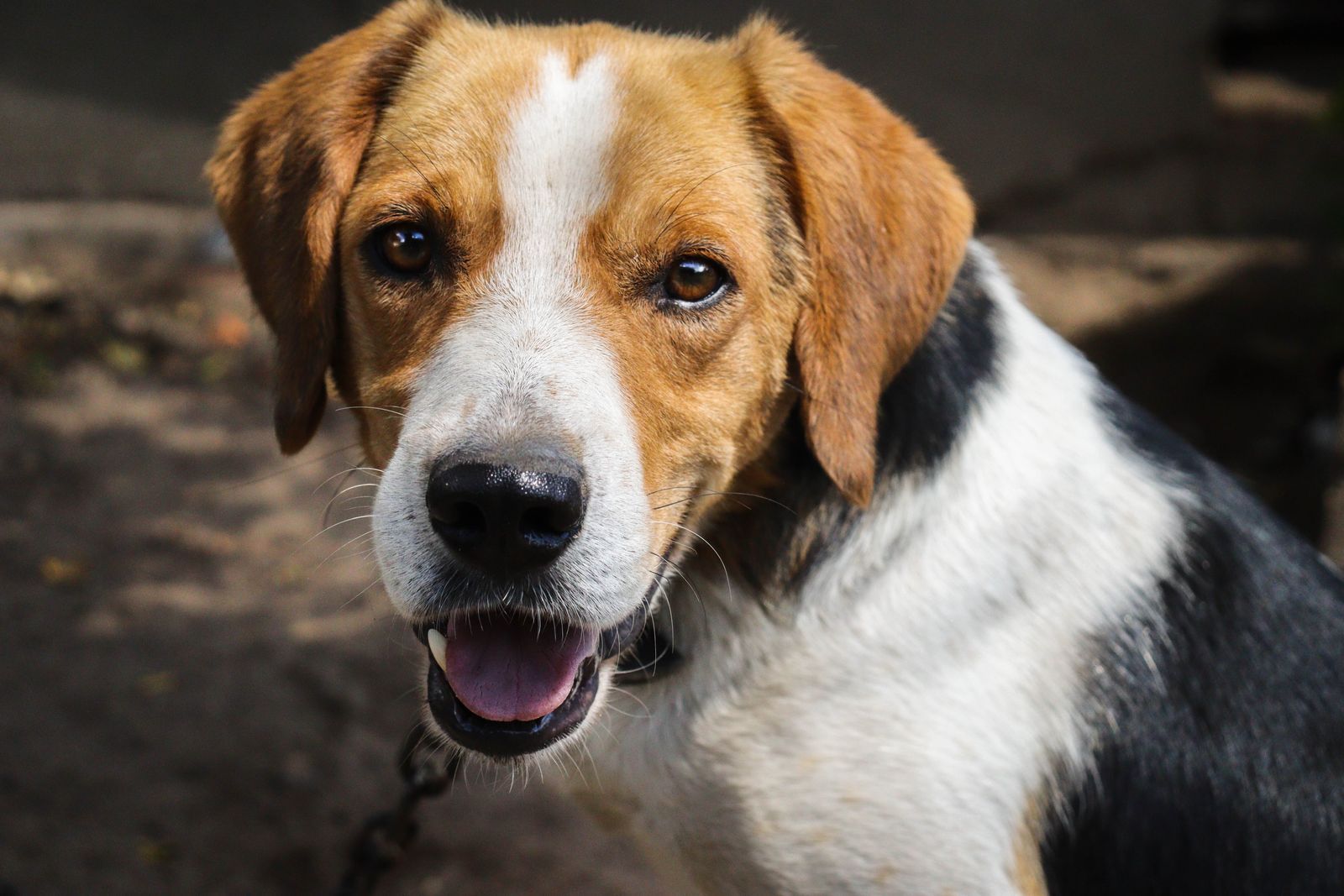
Beagle snapshot
The American Kennel Club describes the Beagle as a merry, friendly, and curious scent hound, bred to hunt in packs and built to follow a trail for hours. The AKC notes that Beagles are happy-go-lucky, funny, and generally easygoing, and that pack heritage shows up at home as a dog that wants company, follows its nose over any instruction, and treats food as the main event of the day. That food drive is a health factor in this breed, because extra weight loads the joints and complicates thyroid care.
| Height | Two varieties. Up to 13 inches at the shoulder, and 13 to 15 inches. |
|---|---|
| Weight | Under 20 pounds for the smaller variety. About 20 to 30 pounds for the larger variety. |
| Lifespan | 10 to 15 years, as listed by the AKC. |
| Coat | A close, hard, medium length hound coat, dense and weather resistant, in typical hound colors. |
| Temperament | Merry, friendly, and curious, with the independence and voice of a pack hunting hound. |
| Energy and exercise | Active for its size. Needs daily exercise and scent based play, with food controlled carefully because the breed gains weight easily. |
The snapshot fact that matters most for insurance is the lifespan. A dog that commonly lives well into its teens will renew a policy many times, and every renewal is a chance for weak chronic condition wording to quietly remove the conditions the dog actually has. The second fact is size. A Beagle is small enough that surgery and medication are less involved than in the large breeds in this series, which shifts the value of the policy toward steady, repeated care rather than one catastrophic bill.
Health tendencies in Beagles
The AKC health screening list for the breed names hip evaluation, thyroid evaluation, and eye evaluation among its recommended tests, and everyday veterinary experience adds epilepsy, the kneecap, and the ears. Beagles are generally considered a hardy breed. These are tendencies, not predictions about an individual dog, and several of them are conditions a dog lives with for years once they appear.
This section is general information about conditions a breed can be prone to. It is not veterinary advice and it is not a diagnosis of any dog. Signs listed here are possible signs owners may notice, and many of them have several causes. Only a veterinarian who examines your dog can say what a sign means.
Epilepsy (idiopathic epilepsy)
What it is
A neurological condition of repeated seizures where no underlying cause is found. Cornell's Riney Canine Health Center explains that a seizure is abnormal, excessive activity of brain cells, that idiopathic epilepsy is diagnosed when no structural or metabolic cause turns up, and that Beagles are among the purebred breeds where epilepsy is more common. Cornell notes that dogs with this condition typically have their first seizures between 6 months and 6 years of age.
Signs owners may notice
- A generalized episode where the dog falls over, paddles its legs, and loses awareness, sometimes with drooling or loss of bladder control.
- Shorter or stranger episodes, such as staring, lip licking, snapping at the air, or sudden unsteadiness.
- A period after an episode where the dog seems tired, clingy, confused, or unusually hungry.
- Before an episode, some dogs act restless or seek their owner out, which owners learn to recognize over time.
How vets usually evaluate and treat it
Because epilepsy is a diagnosis of exclusion, vets usually start with a full exam, a description or video of the episode, bloodwork, and a urine test to rule out metabolic causes such as low blood sugar, liver problems, or toxin exposure. Depending on age and findings, referral to a neurologist, MRI imaging, and spinal fluid testing may follow to rule out a problem inside the brain. Treatment is usually daily anti-seizure medication when seizures are frequent enough to warrant it, with monitoring blood tests to check medication levels and organ health, and a seizure diary kept at home.
Hypothyroidism (underactive thyroid)
What it is
A hormonal condition in which the thyroid glands produce less thyroid hormone than the body needs, slowing metabolism down. Cornell describes hypothyroidism as an endocrine disease that most commonly appears in middle aged dogs, and the AKC screening list for Beagles includes a thyroid evaluation, which reflects how established the tendency is in this breed. It is not curable, and it is one of the most manageable chronic conditions on this list.
Signs owners may notice
- Weight gain even though food and exercise have not changed.
- Low energy, sleeping more, and less interest in walks or play.
- A thinning or dull coat, hair loss on the body or tail, and recurring skin or ear infections.
- Seeking warm places and seeming to feel the cold more than before.
When it can be urgent
Hypothyroidism develops slowly and is almost never an emergency on its own. Severe weakness, collapse, marked confusion, or a dog that cannot be roused needs same day care, because those signs suggest something more serious than a routine thyroid case, whether or not the thyroid is involved.
How vets usually evaluate and treat it
Vets usually evaluate with an exam, weight history, and thyroid blood testing, often a panel rather than a single value, because other illness can distort thyroid results. Cornell notes that treatment is a synthetic thyroid hormone given daily, with follow up blood tests after starting and at intervals afterward to confirm the dose is right. Most dogs then stay on the medication for life, with periodic rechecks.
Hip dysplasia
What it is
The familiar inherited hip problem, in a smaller dog than most people picture. The hip joint fits loosely, wears unevenly, and becomes arthritic over time. Cornell's Riney Canine Health Center describes the same looseness leading to arthritis and pain, and the condition sits on the AKC screening list for Beagles even though the breed is not large. Extra body weight makes a loose hip work harder, which is why this condition and the Beagle appetite belong in the same conversation.
Signs owners may notice
- Stiffness after rest, trouble rising, or reluctance on stairs and jumps.
- A swaying or bunny hopping gait at a run.
- Slowing down on walks that used to be easy, or sitting with a leg out to one side.
When it can be urgent
Hip dysplasia is a slow condition and a routine appointment problem. A dog that suddenly will not bear weight on a back leg, or cries out, may have an injury rather than simple arthritis, and that change deserves prompt care.
How vets usually evaluate and treat it
Evaluation is a hands on joint exam plus hip X-rays. In a dog of this size, treatment usually leans medical first: weight control down to a lean condition, controlled exercise, pain and anti-inflammatory medication, joint support, and rehabilitation. Surgery is a less common category in this breed than in large dogs, but it exists for cases that do not respond to medical management.
Luxating patella (slipping kneecap)
What it is
A developmental condition in which the kneecap slips out of the groove it should ride in, usually toward the inside of the leg. The Merck Veterinary Manual describes patellar luxation as displacement of the kneecap from its groove, often tied to the shape of the whole hind leg, and vets grade its severity during an exam. It appears on the Beagle screening conversation because the breed is on the list of dogs where the problem is watched for.
Signs owners may notice
- A sudden skip or hop on a back leg for a few steps, then normal walking again. Merck calls this intermittent, short lived lameness the characteristic sign.
- Holding a back leg up briefly, or stretching it out behind before continuing.
- In more severe cases, a crouched stance, bowed legs, or lameness that does not come and go.
When it can be urgent
A skipping gait is a book an appointment sign, not an emergency. A kneecap problem combined with a fall, a cry of pain, swelling, or a leg that will not bear weight at all could be a cruciate ligament injury or a fracture, and that combination needs prompt care.
How vets usually evaluate and treat it
Vets usually diagnose and grade the kneecap by hand during an exam, sometimes with X-rays to look at leg alignment and arthritis. Merck notes that conservative care, meaning weight management, controlled exercise, physical therapy, and pain medication, suits mild cases, while surgery is usually considered for moderate to severe grades, persistent lameness, or a condition that is getting worse.
Eye disorders (glaucoma and cherry eye)
What it is
Two different eye problems share this card because Beagle owners meet both. Glaucoma is a rise in pressure inside the eye when fluid does not drain properly. The Merck Veterinary Manual explains that the increased pressure can damage the retina and the optic nerve, and that the sudden form brings severe pain, redness, and loss of vision. Cherry eye is a prolapse of the tear gland of the third eyelid, seen as a red lump in the inner corner of the eye. The gland produces part of the tear film, so modern treatment aims to preserve and reposition it rather than remove it.
Signs owners may notice
- For glaucoma: a red eye, squinting or signs of eye pain, a cloudy or bluish surface, a dilated pupil, an eye that looks larger, or bumping into things.
- For cherry eye: a smooth red lump appearing in the inner corner of one eye, sometimes in both, often in a young dog.
- For either: pawing at the eye, tearing, or discharge, which are reasons to be examined rather than watched.
How vets usually evaluate and treat it
Eye evaluation usually includes a full eye exam and measurement of pressure inside the eye with an instrument called a tonometer, with referral to a veterinary ophthalmologist for confirmed or suspected glaucoma and for many cherry eye repairs. Glaucoma categories include pressure lowering eye medication, sometimes medication for the other eye as a preventive step, and surgery in advanced or painful cases. Cherry eye is usually corrected with surgery that tucks the gland back into place, followed by eye medication and a cone while it heals.
Ear infections (otitis externa)
What it is
Inflammation and infection of the outer ear canal. The Merck Veterinary Manual's owner guide calls otitis externa the most common disorder of the ear canal in dogs, and lists allergies, bacteria, yeast, parasites, and objects in the canal among its causes. Beagle ears set the stage. Long, heavy ear flaps cover the canal, limit airflow, and hold warmth and moisture in, so a canal that is already inflamed by allergy gets infected more easily and clears more slowly.
Signs owners may notice
- Head shaking, scratching or rubbing at one or both ears, and tilting the head.
- Redness inside the ear, discharge, scaly skin, and a noticeable foul odor, which are the signs Merck lists for this condition.
- Pain or snapping when an ear is touched, in a dog that normally tolerates handling.
When it can be urgent
Most ear infections are a prompt routine visit. A head tilt that comes with loss of balance, circling, or eye movements the dog cannot control can mean the problem has reached the middle or inner ear, and that needs same day care. A swollen, fluid filled ear flap from vigorous head shaking, called an aural hematoma, also deserves a prompt visit.
How vets usually evaluate and treat it
Vets usually examine the canal with an otoscope, check whether the eardrum is intact, and look at a swab of ear material under the microscope to tell yeast from bacteria. Treatment categories include professional cleaning, topical medication placed in the ear, treatment of any underlying allergy that keeps restarting the cycle, and a recheck visit to confirm the infection has actually cleared. Merck stresses that unless every cause is treated, the condition often returns.
Policy decisions that matter for a Beagle
For most breeds in this series, the policy table is about one large event. For a Beagle it is about duration. A long lived dog with lifelong medication, repeat bloodwork, and recurring small claims tests the renewal rules, the condition counting rules, and the deductible design far more than it tests the annual limit. Read these rows with a ten year horizon in mind.
| Policy feature | Why it matters for a Beagle | Stronger wording looks like | Watch out for |
|---|---|---|---|
| Chronic condition renewal terms | Epilepsy and hypothyroidism are diagnosed once and treated at every renewal for the rest of the dog's life. | A condition covered in one policy term stays covered in later terms while enrollment continues. | Wording that caps a condition per year, ends coverage for a condition at renewal, or reclassifies it as pre-existing. |
| Hereditary condition coverage | Epilepsy, hip dysplasia, luxating patella, and inherited eye disorders make up most of the breed list. | Hereditary and congenital conditions are covered on the same terms as other illnesses. | Hereditary exclusions, or breed specific exclusions aimed at conditions like these. |
| Deductible type | Ears, skin, and routine illness visits produce many modest bills across a year, every year. | An annual deductible that is met once, after which eligible claims across conditions are reimbursed. | A per-condition deductible that restarts for each new condition, which a multi-condition Beagle can meet repeatedly. |
| Diagnostics coverage | A first seizure is a workup, not a prescription: bloodwork, referral, and possibly MRI and spinal fluid testing. | Lab work, advanced imaging, and specialist exams are covered categories for a covered condition. | Medication only thinking, where the tests that establish the diagnosis are excluded or separately capped. |
| Monitoring and prescription coverage | Thyroid panels, drug level checks, and daily medication are the standing cost of the breed's two main conditions. | Prescription medication and monitoring tests for a covered chronic condition are both reimbursable. | Policies that cover the diagnosis visit and the drug but exclude routine monitoring bloodwork. |
| Bilateral condition rule | Kneecaps and hips come in pairs, and a problem on one side raises the chance of the same problem on the other. | Each side is judged on its own record, with clear terms for the second side. | Wording that treats the second knee or hip as pre-existing after the first is diagnosed. |
| Recurring condition counting | Ear infections can return for years, often tied to an underlying allergy. | A clear definition of when repeat episodes are one condition and when they are new, stated in the policy. | Vague recurrence wording that lets each flare be counted in whichever way pays least. |
| Eye condition terms | Glaucoma needs immediate treatment and often long term medication. Cherry eye commonly needs surgery. | Eye disorders, including hereditary ones, are covered, with surgery and ongoing medication included. | Eye exclusions, or cherry eye classified as cosmetic or elective and denied on that basis. |
Life stages: puppy, adult, and senior
Puppy
The puppy stage is when the record is cleanest and the waiting periods can run quietly in the background. Cherry eye often appears in young dogs, kneecaps can be graded at early exams, and epilepsy typically has not started yet, since Cornell places the usual first seizures from 6 months onward. Enrolling before those notes exist is the single most valuable move a Beagle owner makes. Keep the puppy lean from the start, because early weight habits are the cheapest joint medicine this breed ever gets.
Adult
Adulthood is when the chronic list tends to declare itself. A first seizure and its workup, a thyroid panel that comes back low, recurring ear infections that point to an allergy underneath. The insurance work of this stage is administrative. File claims as they happen, keep the seizure diary and the bloodwork results, and check at each renewal that the conditions the dog now has are still described as covered. If a policy's renewal terms weaken, that discovery should happen at renewal, not at the next claim.
Senior
A Beagle senior can be a senior for a long time. Arthritis from hips and knees, ongoing seizure or thyroid management, and eye changes all overlap in this stage, and glaucoma risk is one reason new eye redness in an older Beagle should never be watched at home. Review the policy for age based changes, premium increases, and any reduction in coverage at advanced ages. A plan that quietly thins out exactly when a long lived breed needs it most fails the purpose it was bought for.
A claim, step by step: an epilepsy workup
The example below is hypothetical. It is not a real dog, a real claim, or a guarantee of how any insurer will decide. It follows a young adult Beagle through a first seizure, the diagnostic workup, the start of daily medication, and the repeat claims that follow at renewal, because that full arc, not a single invoice, is what Beagle coverage has to handle. Pet insurance generally reimburses after you pay the vet, as explained in how pet insurance works.
The first seizure, and the notes that start the file
One evening the dog stiffens, falls onto its side, and paddles for under a minute, then sleeps hard and seems confused for a while. The owner notes the date and time, how long it lasted, and what it looked like, and calls the vet the next morning. Because it was a single short episode and the dog recovered, the vet books a prompt workup rather than an emergency visit. If it had lasted longer, repeated that day, or the dog had not come back to normal, it would have been an emergency trip that night, and the claim file would have started at an emergency hospital instead.
The vet visit and the rule out workup
At the clinic, the vet takes the episode history, does a full physical and neurological exam, and runs bloodwork and a urine test to look for a metabolic cause, such as low blood sugar, liver problems, or a toxin effect. The results come back normal, which is common and useful, because epilepsy is named only after other causes are ruled out. The records from this visit, the exam findings, the lab results, and the vet's assessment, are the diagnostic core of the claim.
Checking the waiting period and the record
On paper, the insurer will line this episode up against the policy dates. The policy was started when the dog was a puppy, the illness waiting period ended long ago, and there is no earlier note of a seizure, a collapse, a staring episode, or a suspected neurological event. That clean timeline is what makes this a straightforward first claim. A single ambiguous note from before enrollment, such as funny turns queried by an owner at a vaccine visit, is the kind of record that turns the same claim into an argument about pre-existing signs.
Referral, imaging, and paying as you go
When a second seizure follows, the vet refers the dog to a neurologist. The specialist may recommend MRI imaging and spinal fluid testing to rule out a structural problem in the brain. The owner pays each provider directly and collects the same two documents every time: the itemized invoice and the complete records for that visit, including imaging reports. Keeping the general vet and specialist records together matters, because the insurer reads the workup as one story.
Submitting the first claim
The claim is filed with the invoices and records from the clinic and the specialist, with the date of the first seizure stated clearly. With other causes ruled out, the working diagnosis recorded is idiopathic epilepsy, and daily anti-seizure medication begins. The owner starts a seizure diary at home, logging dates, duration, and recovery, which becomes genuinely useful evidence at every later claim and every medication review.
Medication, monitoring, and how reimbursement works
Ongoing care settles into a rhythm of daily medication, follow up blood tests to check drug levels and organ health, and recheck visits. Each eligible bill moves through the same mechanics described in what pet insurance costs and why. Charges count against the deductible first, the policy's reimbursement rate applies to eligible charges after that, and totals are tracked against the annual limit. With an annual deductible, the year's later epilepsy bills are no longer reduced by a deductible that was already met. With a per-condition design, the counting works differently, which is why the deductible choice was flagged in the policy table above.
Renewal, repeat claims, and where they get denied
At renewal, the decisive question is whether epilepsy is still a covered condition or has been reclassified. Under wording that keeps covered chronic conditions covered, the medication refills, blood panels, and rechecks in the new term are filed the same way, referencing the original diagnosis date. Denial pressure points in this breed story are an insurer reading the first seizure as pre-existing because of an earlier vague note, diagnostics denied because imaging was not pre-approved where a policy requires that step, and renewal wording that caps or ends a named chronic condition. Each of those is a clause question, and each can be asked in writing before you buy, not after the second seizure.
What drives a Beagle premium
No responsible guide will name a price for your dog, because the quote depends on the dog, the address, and the settings chosen. What can be explained is the shape of Beagle pricing and the choices that move it. The full mechanics are in what pet insurance costs and why.
Breed risk profile. Insurers see a long lived, small to medium hound whose expensive conditions are chronic and medication based rather than surgical. That produces pricing that reflects steady, predictable care more than rare catastrophic bills. Epilepsy is the wildcard in the profile, because its workup can involve a specialist and advanced imaging even though its ongoing care is routine.
Size. A dog of this weight costs less to anesthetize, image, and medicate than the large breeds in this series, and that relative economy is built into breed pricing. It is one reason the value question for a Beagle is less about the limit and more about whether the steady claims are structured to be reimbursed at all.
Age curve and lifespan. Premiums generally rise with age, and a breed that lives 10 to 15 years spends a long time in the higher priced years. The total cost of insuring a Beagle is therefore a long horizon calculation. A slightly cheaper policy with chronic condition caps can cost more over a decade than a stronger policy, because the caps bite every single year of a lifelong condition.
Location and plan settings. Vet prices in your area set the bill sizes the insurer expects, and your deductible, reimbursement rate, and annual limit choices trade premium against claim returns. For this breed, deductible type deserves the same attention as deductible size, because an annual deductible and a per-condition deductible produce very different results across ears, thyroid, and seizures in the same year.
Pre-purchase checklist for a Beagle policy
- Confirm a condition covered in one term stays covered at renewal, in plain wording, since epilepsy and hypothyroidism are lifelong.
- Confirm hereditary conditions are covered, including epilepsy, hip dysplasia, luxating patella, and inherited eye disorders.
- Check that the epilepsy workup is covered as a whole: bloodwork, neurology referral, MRI, and spinal fluid testing.
- Confirm monitoring bloodwork for chronic conditions is reimbursable, not only the medication itself.
- Ask how recurring ear infections are counted, and whether they are linked to an underlying allergy for claim purposes.
- Choose between an annual and a per-condition deductible using this breed's pattern of several modest claims a year.
- Read the bilateral clause for knees and hips, and the orthopedic waiting period that applies to them.
- Ask how cherry eye surgery is classified, and whether glaucoma treatment and medication for the second eye are covered.
- Enroll as a puppy, before a first seizure, a thyroid result, a cherry eye, or a knee note enters the medical record.
Questions to ask an insurer, in writing
- Once epilepsy is diagnosed and covered, will it remain covered at every renewal while I stay enrolled?
- Are MRI, neurology referral, and monitoring blood tests covered for a seizure workup and follow up?
- How do you count repeated ear infections: separate claims, one recurring condition, or part of an allergy?
- Is hypothyroidism monitoring, the blood panels and not just the medication, reimbursable year after year?
- If one kneecap needs surgery, how is the other kneecap treated under your bilateral rule?
- Is cherry eye surgery covered for a Beagle, and is glaucoma, including treatment of the second eye, covered?
Questions Beagle owners ask
Does pet insurance cover epilepsy in Beagles?
An accident and illness policy can cover epilepsy when hereditary conditions are included, the illness waiting period has passed, and no seizure or seizure like episode was recorded before enrollment. The workup matters as much as the medication, so check that bloodwork, specialist visits, and advanced imaging such as MRI are covered categories, because a first seizure is usually investigated before it is named epilepsy.
My Beagle just had a first seizure. What should I save for a claim?
Save the date and time, how long the episode lasted, what it looked like, and a video if you can take one safely. Keep the itemized invoice and the full visit record, including bloodwork results and any referral notes. Note anything unusual in the day before it, such as a possible toxin, a missed meal, or a new medication. That timeline helps the vet, and it also helps the insurer place the first sign inside or outside the policy period.
Will hypothyroidism stay covered after my policy renews?
It should, under a policy that keeps covered chronic conditions covered at renewal. Hypothyroidism is managed with daily thyroid medication and repeat blood tests for life, so renewal wording is the whole ballgame. Avoid wording that treats a condition as new, capped, or pre-existing at each renewal, and check that monitoring bloodwork for an ongoing covered condition is itself covered, not only the medication.
Are cherry eye and glaucoma covered for Beagles?
They can be, as illness conditions, when eye disorders are not excluded and the signs were not present before enrollment or during the waiting period. Cherry eye surgery is sometimes classified differently from other eye surgery, and some policies have specific eye condition wording, so ask in writing how cherry eye repair and glaucoma treatment, including long term eye medication, are handled for this breed.
Do repeated ear infections count as one condition or many?
Policies differ, and the difference decides real money over a Beagle's life. Some treat recurring ear infections as one ongoing condition, some link them to an underlying allergy, and some treat each episode separately. How they are counted interacts with the deductible type. An annual deductible is met once, while a per-condition deductible can restart the counting. Ask how recurrent ear infections are classified before you choose the deductible.
When is the best time to enroll a Beagle?
As a puppy, before a first seizure, a thyroid result, a cherry eye, or a knee or hip note is in the record. Beagles are long lived, so a policy started young has many renewal years ahead of it, which makes the chronic condition renewal terms worth reading on day one. Enrolling early also clears the waiting periods while the dog is least likely to need care.
Sources and further reading
- American Kennel Club, Beagle breed page for the two size varieties, lifespan, temperament, and breed character.
- Cornell Riney Canine Health Center, Idiopathic epilepsy in dogs for seizures with no identifiable cause, Beagles among the affected breeds, age of onset, emergency seizure signs, and rule out testing.
- Cornell Riney Canine Health Center, Hypothyroidism for thyroid hormone deficiency, its signs, and daily hormone treatment with monitoring.
- Cornell Riney Canine Health Center, Canine hip dysplasia for joint looseness leading to arthritis, diagnosis, and treatment categories.
- Merck Veterinary Manual, Patellar luxation in dogs and cats for the slipping kneecap, its skipping gait sign, grading, and conservative versus surgical care.
- Merck Veterinary Manual, Glaucoma in dogs for pressure inside the eye, its signs, and why it needs immediate veterinary care.
- Merck Veterinary Manual, Disorders of the conjunctiva in dogs for the third eyelid and its gland, including prolapse of the gland known as cherry eye.
- Merck Veterinary Manual, Ear infections and otitis externa in dogs for ear canal inflammation, its signs and causes, otoscope examination, and why untreated causes lead to recurrence.