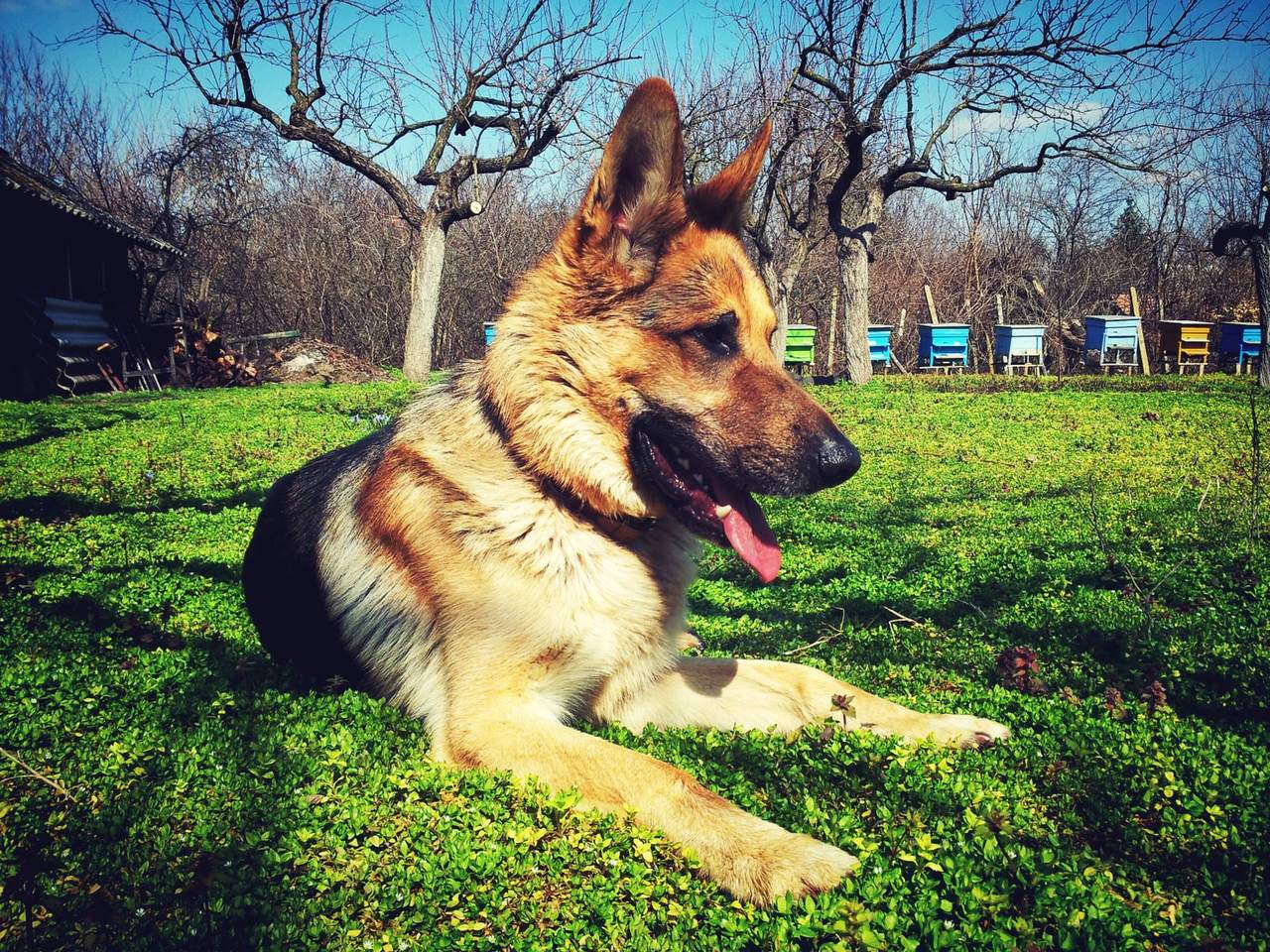
German Shepherd snapshot
The American Kennel Club describes the German Shepherd Dog as a large, agile, muscular herding dog of high intelligence, and calls it a confident, courageous, and steady worker. This is a dog bred to stay close to a handler, learn complex jobs, and keep going for hours. That same large, athletic build is what loads the hips and elbows, deepens the chest, and shapes the health list in the next section. Shepherds need substantial daily exercise and mental work, and a bored shepherd at home is a management problem long before it is a medical one.
| Height | Males 24 to 26 inches at the shoulder. Females 22 to 24 inches. |
|---|---|
| Weight | Males 65 to 90 pounds. Females 50 to 70 pounds. |
| Lifespan | 7 to 10 years, as listed by the AKC. |
| Coat | A medium length double coat, dense and close lying, that sheds heavily and needs regular brushing. |
| Temperament | Confident, courageous, and smart, with strong loyalty to its own people and a watchful reserve with strangers. |
| Energy and exercise | High. A working breed that needs vigorous daily exercise, training, and a job for its mind, not only a walk around the block. |
Two snapshot facts do quiet insurance work. The first is size, because anesthesia, imaging, medication, and surgery are all harder and more involved in a dog of this weight. The second is the AKC lifespan of 7 to 10 years, which is short for such a popular breed. Senior conditions such as degenerative myelopathy can arrive while the dog still feels middle aged to its owner, so a policy bought for a puppy needs to still make sense for a heavy, aging dog.
Health tendencies in German Shepherds
The breed club health screening and the AKC point to the same concentrated list. None of these conditions is certain in any individual dog, and screening by responsible breeders lowers the joint risk in particular. They are tendencies with a strong enough pattern that they should drive which policy you buy, what you check before you pay, and how early you enroll.
This section is general information about conditions a breed can be prone to. It is not veterinary advice and it is not a diagnosis of any dog. Signs listed here are possible signs owners may notice, and many of them have several causes. Only a veterinarian who examines your dog can say what a sign means.
Hip dysplasia
What it is
An inherited condition in which the hip joint forms incorrectly, so the ball and socket fit loosely instead of snugly. Cornell's Riney Canine Health Center explains that the looseness wears the joint unevenly over time, and arthritis develops, with pain and loss of mobility. German Shepherds are one of the medium and large breeds Cornell names for this condition, and growth rate and nutrition can make a genetic tendency better or worse.
Signs owners may notice
- Stiffness after rest, or trouble rising, lying down, and climbing stairs.
- A swaying rear end, or a bunny hopping run where both back legs move together.
- Limping on a back leg, worse after exercise, and less interest in jumping or playing.
- Thinning muscle over the hind legs as the dog shifts weight forward.
When it can be urgent
Hip dysplasia itself usually develops slowly and is a prompt appointment rather than an emergency. A dog that suddenly cannot bear weight, cries out, or will not rise at all may have an injury or another problem on top of the joint disease, and that change deserves same day veterinary care.
How vets usually evaluate and treat it
Evaluation usually combines a hands on orthopedic exam with hip X-rays, sometimes taken under sedation so the joint laxity can be measured properly. Treatment depends on age and severity. Categories include weight control, controlled exercise, pain and anti-inflammatory medication, physical rehabilitation, and, in more severe cases, surgery ranging from procedures in young dogs to total hip replacement or salvage surgery in adults.
Elbow dysplasia
What it is
A group of developmental problems in the elbow joint of the front leg, where the three bones that form the elbow do not grow and fit together cleanly. Abnormal loading then damages cartilage and leads to arthritis. It is inherited, it often affects both elbows, and the breed club recommends screening elbows as well as hips before breeding, which shows how central this joint pair is in the breed.
Signs owners may notice
- Front leg lameness in a young, growing dog, often worse after exercise or after rest.
- Stiffness in the front end, a shortened stride, or elbows that turn in or out when standing.
- Reluctance to go down stairs, jump down, or play hard, even when the dog seems willing in spirit.
When it can be urgent
Elbow dysplasia tends to declare itself as a limp that keeps returning, and a persistent limp in a growing large breed puppy should not be watched for months at home. Sudden non weight bearing lameness, a swollen joint, or lameness after a fall or collision needs prompt care because fractures and other injuries look similar at home.
How vets usually evaluate and treat it
Vets usually start with a gait and joint exam and elbow X-rays. Some cases need advanced imaging such as a CT scan, or a camera look inside the joint, to see a small cartilage or bone fragment. Treatment categories include rest and controlled exercise during flare ups, weight control, pain medication, rehabilitation, and surgery in selected cases to remove a fragment or improve how the joint loads.
Degenerative myelopathy
What it is
A progressive disease of the spinal cord in older dogs. Cornell describes it as causing gradual muscle weakness and loss of coordination, and notes that it acts in some ways like ALS in people. The University of Missouri, whose researchers identified the SOD1 gene mutation linked to the disease, describes a late onset condition that typically starts at about 8 to 10 years of age and progresses until it affects all limbs. There is no cure. A DNA result can show risk, but Missouri is clear that not every dog with the mutation develops the disease, so a test result alone is not a diagnosis.
Signs owners may notice
- Wobbling and loss of coordination in the hind legs, sometimes starting more on one side.
- Back paws that knuckle over or drag, with scuffed nails or worn tops of the toes.
- Weakness that builds over months, trouble standing, and later difficulty with continence.
- Little sign of pain from the condition itself, which is one clue vets weigh against painful spinal problems.
When it can be urgent
This disease moves slowly, and gradual change is a routine but important appointment. Sudden hind leg paralysis, obvious back pain, or a dog that cries when moving points away from a slow disease and toward a disc or injury emergency, and that needs same day care.
How vets usually evaluate and treat it
Cornell notes there is no specific test that diagnoses this condition in a living dog. Vets usually work by ruling out other spinal diseases, using a neurological exam, bloodwork, X-rays, and sometimes MRI or CT imaging and spinal fluid analysis, with genetic testing as one supporting piece. Care is supportive. Categories include physical therapy and rehabilitation, which Cornell notes may delay progression, plus harnesses or slings, carts, traction at home, nail and paw protection, and regular quality of life reviews.
Bloat (gastric dilatation volvulus, or GDV)
What it is
An emergency in which the stomach fills with gas and fluid and then twists on itself. The Merck Veterinary Manual describes the twist as cutting off the stomach's entry and exit and interfering with blood flow, so the dog can slide into shock. Large, deep chested breeds carry the higher risk, and the German Shepherd build fits that shape exactly. Simple gas and a twisted stomach can look alike at home, and only imaging at a hospital can tell them apart.
Signs owners may notice
- Repeated retching or trying to vomit with little or nothing coming up.
- A belly that looks swollen, tight, or rounder than usual, and restlessness or pacing.
- Heavy drooling, rapid or labored breathing, and signs of belly pain.
- Pale gums, weakness, or collapse as shock sets in.
How vets usually evaluate and treat it
Emergency teams usually stabilize first, with an exam, treatment for shock and pain, bloodwork, and an abdominal X-ray to confirm whether the stomach has twisted. Treatment is emergency surgery to decompress and untwist the stomach, check the stomach wall and spleen for damaged tissue, and usually tack the stomach to the body wall, a procedure called gastropexy, so it cannot twist again. Hospital monitoring follows, because rhythm and circulation problems can appear after the surgery itself.
Exocrine pancreatic insufficiency (EPI)
What it is
A condition in which the pancreas does not make enough digestive enzymes, so food passes through poorly digested and the dog loses condition even while eating eagerly. The Merck Veterinary Manual notes that in German Shepherds the most common cause is pancreatic acinar atrophy, a loss of the enzyme producing tissue, and that the condition most often appears in young adult dogs of this breed. The loss is generally permanent, and management is for life.
Signs owners may notice
- Weight loss despite a strong, sometimes ravenous, appetite.
- Loose, bulky, or pale stools, and a lot of gas.
- A dull coat and a dog that seems hungry all the time or eats things it normally would not.
When it can be urgent
EPI usually develops gradually and is worked up at a regular appointment. Rapid weight loss, vomiting that will not settle, refusal to eat, or signs of dehydration move the visit to the same day, because other digestive diseases can look similar and can be more dangerous.
How vets usually evaluate and treat it
Vets usually start with an exam, weight history, and bloodwork. Merck identifies a blood test called trypsin-like immunoreactivity as the diagnostic test for this condition, and vets often also check vitamin levels such as cobalamin, which can run low when digestion fails. Treatment centers on pancreatic enzyme replacement added to every meal, with diet changes, vitamin supplementation, and follow up weight checks as the usual supporting categories.
Allergies and skin problems
What it is
An overreaction of the immune system to things in the environment, fleas, or food ingredients, showing up mainly as itchy, inflamed skin. The Merck Veterinary Manual's owner guide to allergies in dogs explains that itching is the most typical sign, that the feet, face, ears, front legs, and belly are commonly affected, and that scratching leads to wounds, hair loss, and secondary skin and ear infections. Shepherds with allergies usually need management that continues across seasons and years.
Signs owners may notice
- Scratching, licking, or chewing at the paws, belly, ears, or rear end.
- Red or thickened skin, hair loss, scabs, or a musty skin odor.
- Recurring ear trouble or skin infections that clear and then return.
When it can be urgent
Allergy care is usually routine, but a swollen face, hives with trouble breathing, a hot and rapidly spreading skin infection, or a dog that has scratched itself raw and will not settle needs prompt, same day care rather than a wait and see approach.
How vets usually evaluate and treat it
There is no single test that proves an allergy, so vets usually work through an exam and history, rule out fleas and infection first, check skin and ear samples under the microscope, and sometimes use a food elimination trial or allergy testing to identify triggers. Treatment categories include flea control, bathing and coat care, medication for itch and inflammation, treatment of secondary infections, diet trials, and immunotherapy in some cases. Merck describes atopic dermatitis as a lifelong condition that needs long term management and regular veterinary review. A simple flare diary helps that management: note the season, any food or flea treatment change, and which treatment settled the itch, and bring it to rechecks and renewals of the claim story.
Policy decisions that matter for a German Shepherd
Every breed guide on this site uses the same policy vocabulary, but the rows below are weighted for this dog. For a shepherd, the expensive questions are a major emergency surgery, two pairs of joints, and conditions that are managed rather than cured. Compare policies row by row, in the actual policy wording, not in a summary brochure.
| Policy feature | Why it matters for a German Shepherd | Stronger wording looks like | Watch out for |
|---|---|---|---|
| Hereditary condition coverage | Hip and elbow dysplasia, degenerative myelopathy, and pancreatic insufficiency all run in the breed. | Hereditary and congenital conditions are covered on the same terms as other illnesses. | A hereditary exclusion, or a short list of named hereditary conditions that leaves out this breed's list. |
| Annual limit | One GDV night, or one major joint surgery on a large dog, can consume a small limit in a single event. | A high annual limit, or no annual cap, that resets each policy year. | Low annual limits and per-condition caps that split one emergency into several capped buckets. |
| Bilateral condition rule | Hips and elbows come in pairs, and dysplasia commonly shows on both sides over time. | Each side is assessed on its own facts, with clear wording about when the second side is covered. | Wording that treats the second side as pre-existing once the first side has been diagnosed or treated. |
| Orthopedic waiting period | Joint claims are exactly the claims a young shepherd is most likely to make early in the policy. | A defined orthopedic waiting period that can be shortened or waived with a documented vet exam, as some policies allow. | Long special waiting periods for cruciate or orthopedic conditions that are buried in definitions rather than stated up front. |
| Chronic condition renewal terms | EPI, allergies, and arthritis from dysplasia are treated for years, across many renewals. | A condition covered in one term stays covered in later terms while you remain enrolled. | Per-year condition caps, or renewal wording that reclassifies a chronic condition as pre-existing. |
| Diagnostics and rehabilitation | Degenerative myelopathy value sits in MRI workups, rehab, and mobility support, not in an operation. | Advanced imaging, specialist exams, rehabilitation, and physical therapy are covered categories. | Policies that pay for surgery but exclude or tightly cap rehab, imaging, or exam fees. |
| Emergency care terms | GDV happens at night, often at a hospital that is not your usual clinic. | Emergency treatment at any licensed hospital is covered without prior approval. | Requirements to call for authorization first, or reduced coverage for out of hours or emergency hospitals. |
| Prescriptions, food, and supplements | Enzyme replacement at every meal is the treatment for EPI, and diet can be part of allergy and weight care. | Prescription medication is covered, and the policy says plainly how it treats prescribed food and supplements. | Blanket exclusions for food, supplements, or long term medication that quietly remove the EPI treatment from coverage. |
Life stages: puppy, adult, and senior
Puppy
Enrollment timing does the most work in this stage. A policy started in the first months, before any limp, hip screening result, or digestive note reaches the record, keeps the breed's inherited list insurable. Waiting periods then run while the puppy is young and usually healthy, so the orthopedic waiting period is over long before growth related elbow signs or early hip changes tend to be evaluated. Ask your vet about hip and elbow screening plans, keep growth steady rather than fast, and save every early record. Those records are what an insurer reads later.
Adult
The adult years are when dysplasia often moves from an X-ray finding to a treatment plan, when EPI typically appears in young adults, and when allergy management settles into a routine. This is also the deep chested prime for GDV risk, so knowing your nearest emergency hospital is part of owning this breed, insured or not. Keep claim habits boring and consistent. File for eligible visits as they happen, keep itemized invoices, and do not let a chronic condition go undocumented for a year and then expect clean paperwork.
Senior
With an AKC lifespan of 7 to 10 years, senior issues can arrive earlier than owners expect. Degenerative myelopathy usually starts in this stage, arthritis from dysplasia deepens, and mobility support becomes the main spending category. Check at renewal that premiums, limits, and chronic condition terms still fit a dog whose likely claims are diagnostics, rehab, pain control, and nursing style support at home. A policy that was chosen for surgery alone is the wrong shape for these years.
A claim, step by step: a bloat emergency
The example below is hypothetical. It is not a real dog, a real claim, or a promise of how any insurer will decide. It follows the breed's clearest emergency, a nighttime GDV, because it shows how records, timing, and policy wording come together under pressure. Reimbursement in pet insurance generally works on a pay the vet first, claim back later basis, as explained in how pet insurance works.
Nighttime signs, and the record starts
Late in the evening, the dog starts pacing, drooling, and retching without bringing anything up, and its belly looks swollen. The owner does not wait to see if it settles. On the way to the emergency hospital, a quick note of when the signs started, when the dog last ate, and what it ate goes into a phone. That timeline becomes part of the medical record, and it matters, because duration of signs is one of the things the hospital documents in an emergency like this.
Emergency exam, stabilization, and diagnosis
The hospital team examines the dog, starts stabilization for shock and pain, runs bloodwork, and takes an abdominal X-ray that shows the twisted stomach. The diagnosis in the record is gastric dilatation volvulus. The owner authorizes emergency surgery. At this stage, nobody calls the insurer for permission, and a good policy does not require it. The medical records from this night, the exam notes, the imaging, and the surgical report, are the core evidence for the later claim.
The waiting period check happens on paper, later
Whether this emergency is covered turns on facts that were fixed before that night. Was the policy past its illness waiting period when the signs began. Had the dog ever been seen for vomiting, retching, or a swollen belly before the policy started, which an insurer might argue makes this pre-existing. Had a vet ever recommended a preventive gastropexy, and what does the record say. Owners cannot change those answers at the hospital, which is why the checking in this guide happens before enrollment, not during a claim.
Surgery, hospital stay, and paying the bill
Surgeons decompress and untwist the stomach, check the stomach wall and spleen, perform a gastropexy, and keep the dog for monitoring. The owner pays the hospital directly, as pet insurance normally requires, and asks for two specific documents before leaving: the itemized invoice that lists each service and medication, and the complete medical records for the visit, including the surgical report. A card receipt alone is not enough to support a claim.
Submitting the claim
The claim is filed with the insurer's form or portal, with the itemized invoice, the full records from the emergency hospital, and the regular vet's history if the insurer asks for it. The submission notes the date the signs started, which ties the emergency to the policy period. Follow up visits, staple removal, medication refills, and any complications noted as part of the same emergency are kept together and filed as the same episode, with each invoice saved.
How reimbursement is worked out
Once the insurer accepts the claim as a covered illness, it applies the mechanics described in what pet insurance costs and why. Eligible charges are counted against the deductible, the reimbursement rate in the policy is applied to the rest, and the total is checked against the annual limit. Each of those settings was chosen at enrollment, and a GDV night is exactly where a low annual limit or a per-condition cap stops being an abstract detail.
Where claims like this get denied or reduced
Common pressure points are a waiting period that had not finished, earlier digestive signs in the record that the insurer reads as the same condition, missing or non-itemized invoices, and charges the policy classifies separately, such as boarding, food, or a preventive procedure. If a gastropexy is questioned, the surgical report showing it was performed as part of the emergency repair is the document that supports it. A denial can be appealed with records, and a written explanation of which clause was applied is worth asking for.
What drives a German Shepherd premium
No honest guide can quote a price for your dog, because premiums are set per dog, per address, and per set of choices. What can be explained is why this breed sits where it does in insurers' pricing, and which levers you control. Our full breakdown is in what pet insurance costs and why.
Breed risk and size. Insurers expect orthopedic claims, including surgery, from this breed at a level many breeds never reach, and they price that expectation in. Size multiplies it, because a large dog needs more anesthesia, larger medication amounts, longer surgery, and heavier handling for the same procedure a small dog has.
Age curve. Premiums generally rise as a dog ages, and this breed's costly conditions cluster in the adult and senior years, from dysplasia management to a spinal workup. A short AKC lifespan of 7 to 10 years does not make the breed cheap to insure, because the illness is concentrated into those years rather than spread out.
Location and care market. Where you live changes both the premium and the size of the vet bills the policy is measured against. Emergency and specialist care in a major metro area is priced differently from the same care in a rural market, and insurers set rates by area.
Plan settings you choose. The deductible, the reimbursement rate, and the annual limit are the three main settings, and each one trades monthly premium against what a claim returns. For this breed, cutting the annual limit to lower the premium is the setting most likely to be regretted, because the defining claims, a GDV night or a hip replacement, are single large events. Compare quotes at identical settings, or the comparison is meaningless.
Pre-purchase checklist for a German Shepherd policy
- Confirm hereditary conditions are covered, with hip dysplasia, elbow dysplasia, and degenerative myelopathy not excluded by name or by category.
- Read the bilateral clause for hips and elbows, and ask what happens to the second side after the first side is diagnosed.
- Find the orthopedic waiting period, note the exact date it ends for your dog, and ask whether a vet exam can shorten it.
- Choose an annual limit that can absorb one emergency surgery on a large dog, or a plan with no annual cap.
- Confirm emergency care at any hospital is covered without pre-authorization, since GDV does not happen on a schedule.
- Check that MRI and other advanced imaging, specialist exams, and rehabilitation are covered, not only surgery.
- Confirm a chronic condition such as EPI or allergies stays covered at renewal, and how prescription enzymes, food, and supplements are treated.
- Ask how gastropexy is classified in an emergency repair and as a preventive procedure.
- Enroll before any limp, joint screening, hind leg weakness, or digestive workup is in the record, and keep the complete medical history from your vet.
Questions to ask an insurer, in writing
- Are hip dysplasia and elbow dysplasia covered for this breed, and what waiting period applies to each?
- If one hip is treated, how is the other hip handled under your bilateral condition rule?
- Is degenerative myelopathy covered, including MRI, rehabilitation, and mobility aids?
- Does a covered chronic condition, such as exocrine pancreatic insufficiency, remain covered at every renewal?
- Is emergency GDV surgery covered at an emergency hospital without prior approval, and is the gastropexy performed during that surgery covered?
- Are exam fees covered, or are they deducted or excluded on every claim?
Questions German Shepherd owners ask
Does pet insurance cover hip dysplasia in German Shepherds?
Many accident and illness policies can cover hip dysplasia, but only when the policy includes hereditary conditions, the orthopedic waiting period has passed, and no signs were recorded before enrollment or during that waiting period. A limp, a pain note, or an X-ray finding in the medical record before coverage starts can lead the insurer to treat the hips as a pre-existing condition. Read the hereditary, bilateral, and orthopedic waiting period wording together, because all three apply to this one condition.
Is emergency bloat surgery covered?
Gastric dilatation volvulus is an illness emergency, so an accident and illness policy that has passed its illness waiting period will generally treat it like other covered emergencies, subject to the deductible, reimbursement rate, and annual limit in the policy. What matters most in the moment is speed, not paperwork. Go to an emergency hospital first, keep the itemized invoice and the surgical report, and file the claim after your dog is stable.
My shepherd is getting weak in the back legs. Does that mean it is degenerative myelopathy?
No. Hind leg weakness, wobbling, and dragging feet are possible signs of degenerative myelopathy, but the same signs can come from hip arthritis, a disc problem, an injury, or other spinal disease. Cornell notes there is no single test that diagnoses this condition in a living dog, so vets reach it by ruling out the other causes with an exam and, when needed, imaging and other tests. Only a veterinarian who examines your dog can sort out which problem it is.
Will a policy keep paying for pancreatic enzymes or allergy care year after year?
That depends on the renewal wording. Exocrine pancreatic insufficiency needs enzyme replacement with meals for life, and allergy care can run for years as well. Some policies keep a covered chronic condition covered at renewal, while others cap a condition per year or treat it differently once the policy renews. Look for clear language that a condition covered in one policy term stays covered in the next, and check whether prescription food or supplements the vet prescribes are included or excluded.
When is the best time to enroll a German Shepherd?
As a puppy or young adult, before any of the breed conditions appear in the medical record. Hip and elbow problems can show up while a shepherd is still growing, and anything noted before enrollment or during a waiting period can be treated as pre-existing. Enrolling early also means the orthopedic waiting period is finished long before the senior years, when joint and spinal problems are more likely to be evaluated.
Does insurance pay for preventive gastropexy surgery?
Often not, because many policies exclude preventive or elective procedures, and a gastropexy done before any emergency in a healthy dog is preventive. A gastropexy done as part of emergency bloat surgery is a different situation, because it is part of treating a covered emergency. The wording varies, so ask the insurer in writing how it treats gastropexy in both situations before you count on either one.
Sources and further reading
- American Kennel Club, German Shepherd Dog breed page for size, lifespan, temperament, and breed character.
- Cornell Riney Canine Health Center, Canine hip dysplasia for how the joint looseness leads to arthritis, and how it is diagnosed and treated.
- Cornell Riney Canine Health Center, Degenerative myelopathy for the spinal cord disease, its rule out diagnosis, and physical therapy.
- University of Missouri Canine Genetics Laboratory, Degenerative myelopathy for onset age, progression, the SOD1 risk variant, and why a DNA result is a risk test, not a diagnosis.
- Merck Veterinary Manual, Disorders of the stomach and intestines in dogs for gastric dilatation volvulus signs and emergency treatment.
- Merck Veterinary Manual, Exocrine pancreatic insufficiency in dogs and cats for pancreatic acinar atrophy in German Shepherds, the diagnostic blood test, and enzyme replacement.
- Merck Veterinary Manual, Allergies in dogs for itching as the main sign, affected areas, and long term allergy management.